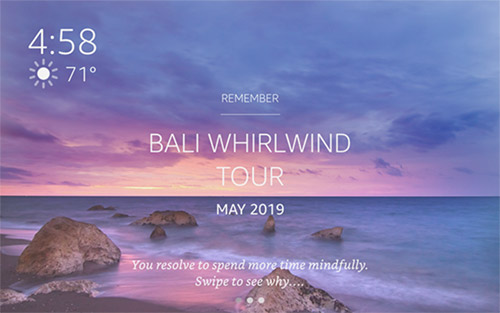
A travel productivity system employed within the Amazon Alexa ecosystem. The goal is to empower and support travelers with their longterm life style resolutions made while on vacation. The system utilizes the Amazon Alexa service, the Amazon Alexa mobile application, and the Amazon Echo Show. Final Report | Executive Presentation
Executive summary
The Amazon Alexa ecosystem has the foundation to facilitate a long-term travel resolution support system. Using the photos captured during a vacation and memories input by the user, a traveler can use the Sparkation system proposed in this study to store their memories, make goals and be reminded of their resolutions on a consistent basis.
Research
The aim of this research is to provide a deeper understanding how the “existential authenticity” realizations made during a travel experience can be woven into a person’s everyday life. The central question becomes, “What aspects of experiences had on vacation provide a catalyst for existential authenticity?” Emotionally rich experiences captured in the moment, retained and then brought to an individual’s mind on a regular basis for rumination will ensure a moment of existential authenticity lives a long life.
User flow
Using the software mural.co to wireframe the functionality of the system, we created four different scenarios to address the key features required for the system to succeed. The system, also known as Sparkation, can be created and implemented by 3rd party development teams as an Amazon Skill and deployed to all Amazon Alexa users. Sparkation’s scenarios fall into four general categories that can be implemented in any of the available platforms (Echo Show or mobile app) or interactions (voice, visual, gesture) where appropriate:

SCENARIO: DEFINE A RESOLUTION
To start use of the system, a user has to decide to input this resolution into the Alexa application. Initially, setup of the resolution is done through the mobile phone Amazon Alexa application through keyboard input.
SCENARIO: VISUAL REMINDERS
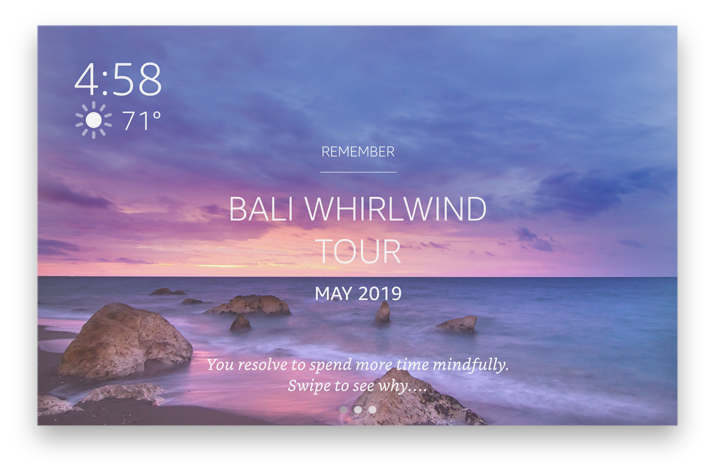
The system reminds using visual stimuli displayed on your phone or Amazon Echo Show of the resolution you are trying to pursue. The visual stimuli are photos you associated during setup of the resolution. Additionally, any commentary, notes or memories you wrote in relation to that photo can be displayed on the Amazon Echo Show or within the Amazon Alexa App.
SCENARIO: ACTIVE REFLECTION
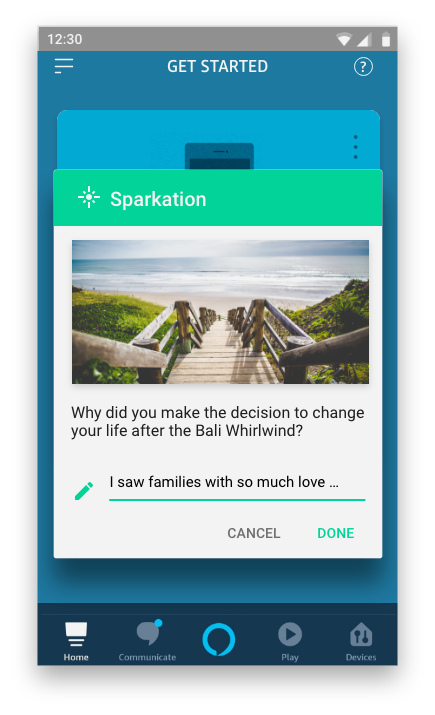
The system actively prompts the user to think about their vacation and why they made the resolution they did. This will engage the user’s cognitive memory to ideally re-spark the motivation they had while on their vacation. The active reflection could take multiple forms:
- Written journaling – the user responds to a system prompt on their mobile application using the phone’s touch keyboard. While the Echo Show does have the ability to type information, extended journaling activities might not be well received since the device is angled at 45 degree angle without a tactile keyboard for each of use
- Vocal journaling – the user responds to a system prompt on their Echo Show or mobile application verbally. The system can record the message in the voice of the user for playback during the “motivation” sequence of events
- Written planning – the user sets goals for himself on a regular basis using the mobile application
SCENARIO: MOTIVATE
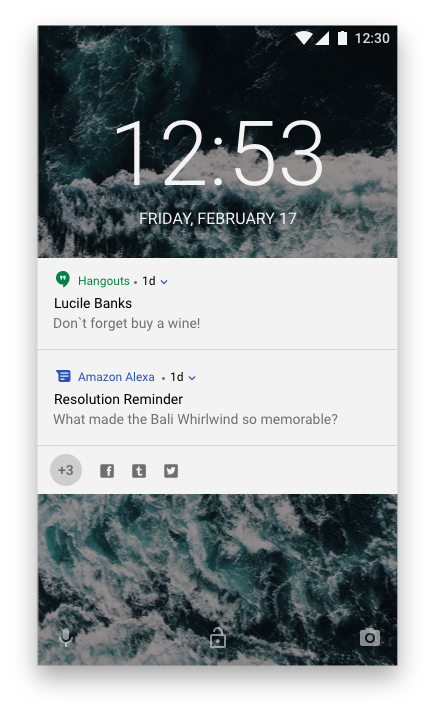
The system passively yet consistently displays motivational messages the user had input during their active reflection. The motivation can be made visible in the mobile app via notification or vocally read to the user through the Amazon Alexa mobile app or the Amazon Echo Show. Vocal journaling can be replayed clips of the user answer previous motivational prompts or can be the Amazon Alexa service reading the written journal entries from the users.
Prototyping
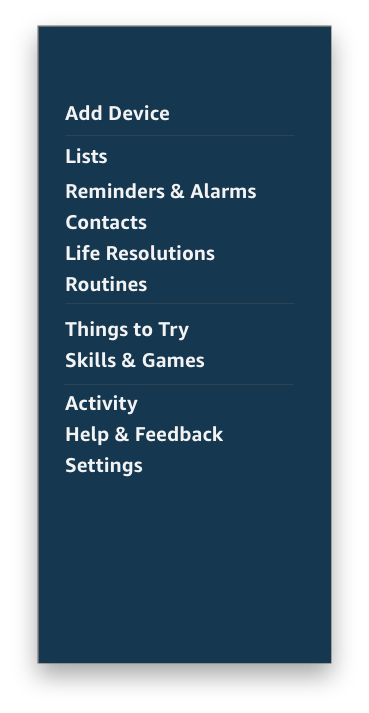
Once the scenarios were identified, mid-fidelity prototyping using Adobe XD commenced. The Sparkation skill, is a new concept to the Amazon Alexa framework. A majority of existing Skills created by 3rd party developers are limited to vocal interactions. Setting up a new data type, a resolution, and interacting with it outside of the voice service requires additional screens to be added to the system.
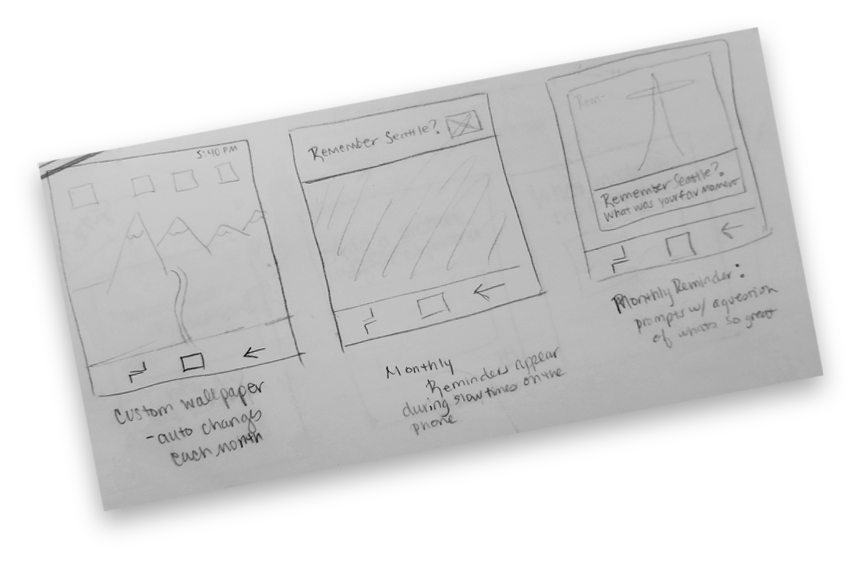
The Define Resolution scenario kicked off the rest of the system so it became the first set of screens created. Using the early sketches and the design flow as a guide, the entire sign up process was created using Adobe XD. Extracting the static elements of the Amazon Alexa app. An informal reveal of the screens to potential testers immediately evoked a response of hesitancy. The visual dichotomy between known Amazon branding and design guidelines and what was shown cognitively prevented the user from engaging readily with the screens.
Usability Testing Results
When looking at the System Usability survey results you’ll notice lower scores among both user groups. Understandably, this result can be inferred due to the nature of the individuals tested, both groups were closer to their respective technical knowledge extremes. As a result, the inexperienced felt less comfortable and needed more assistance, while the more experienced had more criticisms and higher expectations of the system. This was particularly evident during the post-testing interviews. The technological inexperienced users refrained from providing any critical commentary of the system, while the experienced users offered unfettered recommendations throughout the entire process unprompted. The strongest opinions were regarding the voice interface. One user believed the Echo Show provided the system no added value, “I find it useless. I don’t think I can get that intimate…I am never going to ask Alexa something deep.”

Findings
Using the version of the high-fidelity prototype created for the second round of testing in this research study, a suitable foundation to explore long term travel resolution commitments in more detail can be used. The mobile app and Echo Show visual prototype has a high enough usability rating to be able to focus on the emotional content, copy editing and appropriate reminder algorithms to engage with a user in a longitudinal study. The voice features employed on the Echo require further a needs analysis. Based upon the qualitative commentary from testers, it is unlikely the current voice script and expectations of use are valid for use in longitudinal research.